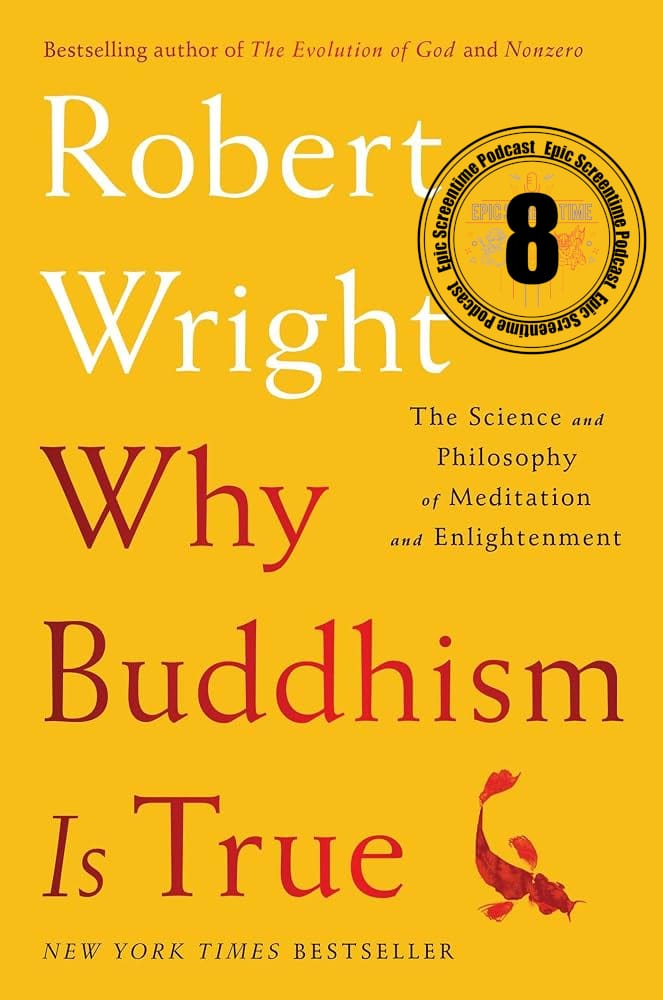
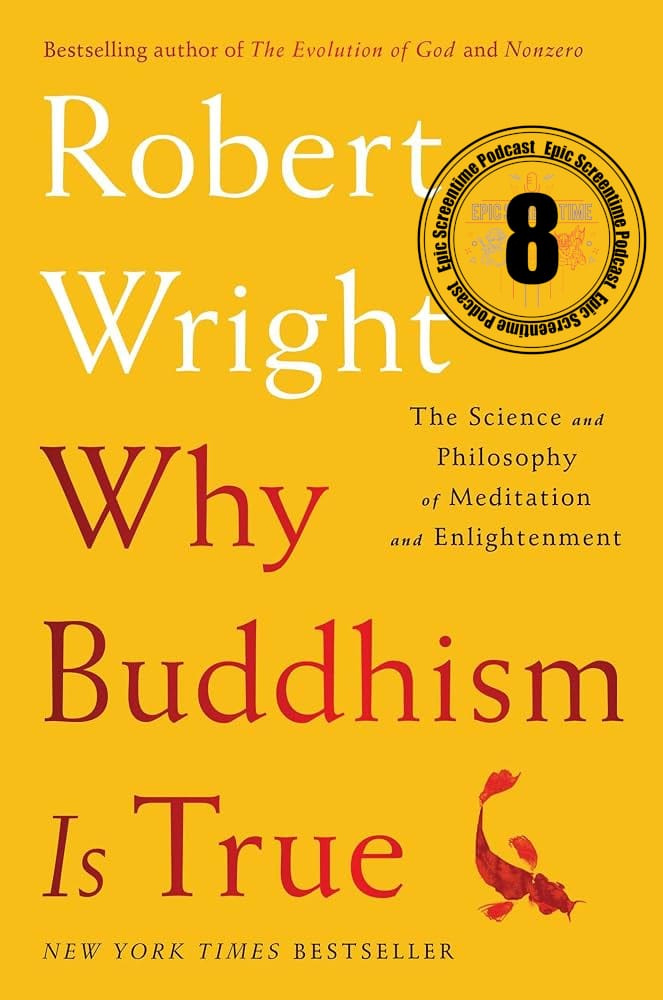
Why Buddhism is True
I do remember a question he asked me; "Why can I be a Buddhist Christian, but I can't be a Christian Buddhist?" I didn't have an answer that day, but the next day my smart-ass-self said "It is a pointy fence, you have to hop off at some point."

The Book in 1 Sentence
A detailed scientific look at the philosophy of Buddhism and why our brains are wired for it at a large picture.
Brief Review
I really enjoyed this book and they way it explains some of the large principals of Buddhism. I have met a few people who practice Buddhism, maybe in a more basic/meditative way, but they have an interesting way of looking at life that reminds me of Stoicism which is something that I have been working on for a few years.
Why I Read this book
Looked/sounded interesting.
In-Depth Review (Favorite Quotes)
So a bit of a weird story about why this book peaked my interest. When I was in middle school, my basketball coach was also my P.E. teacher, maybe even history teacher. I just remember spending a lot of time with him. Somehow we got into a conversation about religion. I don't remember any of the conversation, but it basically came down to the idea of sitting on a fence. I do remember a question he asked me; "Why can I be a Buddhist Christian, but I can't be a Christian Buddhist?" I didn't have an answer that day, but the next day my smart-ass-self said "It is a pointy fence, you have to hop off at some point."
While I don't think either of us made any good points, and I think he asked more to challenge me to think through my beliefs, it is a conversation that has stuck in my head for over 20 years. Almost 30. I think this book, which was published well after that conversation, really helps highlight what I believe he was talking about. On more weird point about this coach. I ran into him at the Charlotte Airport a year or so after this conversation when I had moved to Colorado and was flying back to Virginia.
I tell this story because the author grew up Southern Baptist, like me, and found that the world was bigger than what the SBC presents. He spends time trying to understand the world of Buddhism and finds that part of it makes sense to him. They way he presents this information is in the lens of human natural selection. Taking the idea of "Why do I want to eat Oreos" into the science behind why my body wants it, the philosophy from Buddhism about how to accept and acknowledge that idea, then to make a choice about them rather than succumbing to the feeling.
Rating
Using his personal anecdotes and stories for sure helps this book feel less like a Scientific American research paper and more a book about philosophy. I keep mentioning philosophy in this review because that is more what it felt like. A conversation about the philosophy of Buddhism rather than the religion or even the Nirvana of it. As I have been reading Meditations, Think Like a Monk, and other books, mostly about Stoicism, I realize that learning how to control my emotions rather than be a prisoner of them could have helped me so many times before. That is where I think this book just sits well with me. I am going to give this an 8.
Want to get a hold of me?
Email | [email protected]
None of the link provided are sponsored or affiliate links, unless otherwise notated.
| Book Name | ISBN Code |
|---|---|
| Why Buddhism is True | 9781398568242 |